Although developments in artificial intelligence are rapid, based on today’s knowledge, Generative Engine Optimization (GEO) is already on every marketer’s agenda. Advancements in the AI landscape are reshaping how people search for information and make purchasing decisions. The more AI-powered search is used to discover products and services, the faster GEO shifts from being an opportunity to becoming a necessity in a company’s marketing strategy.
In the first half of this blog post, we explain the core principles of generative search optimization. In the second half, we share Conversion Ninja’s GEO strategy for optimizing digital channels.
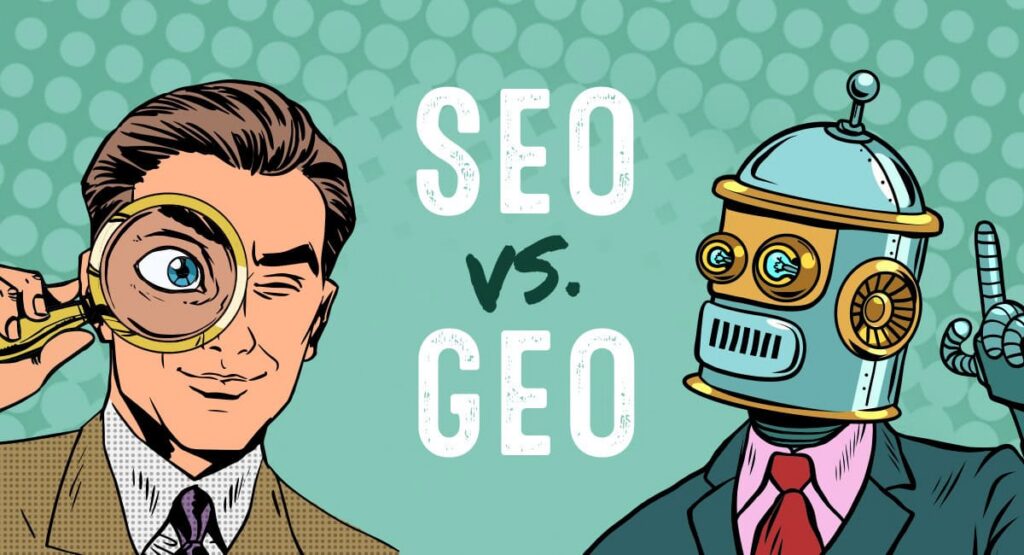
What is the difference between GEO and SEO?
Without much exaggeration, Search Engine Optimization (SEO) essentially means optimizing digital channels for keywords entered into Google Search. Based on the keywords used, web pages are ranked according to relevance. The higher a page ranks for a given keyword, the more traffic it receives.
For example, if a Google search includes the keyword “pleated blinds”, Google will rank various pleated blind providers. To establish context, Google uses the searcher’s location, search history, and other indirect signals. From a marketing perspective, the competitive advantage goes to the merchant that ranks higher than its competitors.
AI-powered search, voice assistants, and platforms such as TikTok, Amazon, and YouTube use broader context and intent-based inputs rather than simple keywords. For example, if the search input is “Best pleated blinds in Estonia”, the process behind it goes in following steps:
1) Context definition
- Keyword: “pleated blinds”
- Search intent: “commercial“
- Geographic scope: “Estonia“
- Search criteria: “best”
2) Provider comparison based on brand strength
This includes social media accounts, reviews, mentions, years of operation, and relevance. For products and services, AI attempts to assess whether the business is trustworthy and actively operating by validating sources.
3) Source combination based on consensus
AI-generated answers avoid relying on a single dominant source. The underlying logic is that the more independent sources confirm the same claim, the more likely it is to be true.
The technical core of GEO
For artificial intelligence systems (such as OpenAI models or Google AI Overviews) to read and use information from a website, the site must be machine-readable, indexable, and semantically clear.
Key challenges in optimizing a website for AI:
- If Google does not index a page, most AI systems will not see it either. The
robots.txtfile must not block subpages or CSS/JS files. - Website HTML must be clean and server-side rendered (SSR). This is a common issue in e-commerce sites where product information is loaded via JavaScript and may not be readable by AI crawlers.
- The website must use a semantic HTML structure. Simply put, AI interprets
<h1>tags as headings,<h2>/<h3>as subheadings,<p>as paragraphs, and<ul>/<ol>as lists. - Structured data is critical to GEO. Schema.org is a structured data vocabulary created jointly by Google, Microsoft, Yahoo, and Yandex. Its purpose is to provide search engines and AI systems with a clear, machine-readable understanding of the information on a page. With Schema markup, it is possible to distinguish: the company behind the website, products and services, ratings and reviews, address and contact information, FAQ answers, and more.
- Technical Quality of the Website. If a site is slow, unstable, lacks HTTPS, or is not mobile-optimized, crawlers may skip it entirely.
- Clear linguistic structure. Concrete statements and question–answer formatting
- Clearly visible company name, registration code, physical address, and contact details
- AI cannot read content protected behind logins or passwords
Conversion Ninja’s GEO strategy checklist
Below is a checklist of tasks and actions required to achieve visibility in AI-powered search results:
1) Indexability
- Robots. txt does not block important pages
- No no_index tags on product pages
- XML sitemap exists and is up to date
- HTTPS is enabled
- 404 and 500 errors are resolved
2) Server-side rendering (SSR)
- Product information is present in HTML (not only loaded via JavaScript)
- Proper H1–H3 heading structure
- Content is not hidden behind iframes or logins
3) Speed and technical quality
- Strong Core Web Vitals scores
- Page load time under 3 seconds (images and videos are the main factors)
- Mobile-optimized design
- No duplicate URLs
4) Structured data (Schema.org)
- Company name, logo, URL, and contact information
- Product/service name, description, price, currency, availability, and SKU
- Average rating and number of reviews
- Frequently Asked Questions (FAQ) on the homepage, product pages, and category pages
- For physical stores: address, phone number, and opening hours
5) Content optimization for AI
- Answer-based content (e.g. “Which blind type is best for a kitchen?”)
- Buying guides, comparison tables, pros and cons on category pages
- Factual claims (“we are the best” vs. “4.8/5 rating based on 214 reviews”)
6) Trust and entity signals
- Clear company information (registration code, VAT number, contact details, physical address)
- Expert articles, blog history, and consistent publishing frequency
- Reviews and testimonials
7) Brand awareness
- Mentions outside the website (comparison articles, blogs, media)
- Active profiles on platforms (Google Business Profile, social media, marketplaces)
What does GEO mean for a company’s marketing
If SEO has already been part of a company’s marketing efforts and the website or e-commerce store meets modern technical standards, optimizing for AI-powered search will be significantly easier. GEO requires both technical IT capabilities and the ability to create website content that is readable not only for AI systems but also for humans.
If you need help with GEO, we have already completed our first projects—and the results have been excellent.